Featuring Articles for HEALTH CARE PROVIDERS, EDUCATORS, AND PARENTS 

Welcome to the Blog

Have a topic idea? Reach out to me at info@doctoramyllc.com with your ideas! 

SUBSCRIBE TO THE NEWSLETTER

If you’re paying attention to social media of late, there’s a book that’s getting a LOT of attention. It’s called Bad Therapy, written by Abigail Shrier. The basic summary is that children are being over-therapized without reason. She vilifies therapists, parenting experts and other school-based programs, often lumping these professionals together. She posits that well-intentioned programs such as SEL (social-emotional learning) and trauma informed programs at schools are unintentionally harming children by asking them about feelings without context, training, or appropriate responses. The author proposes that, in a world where we’re seeing increased amounts of depression, teen suicide, and loneliness, these programs are not effective. In her book, she provides her analysis of the mental health crisis, suggesting that we are pathologizing normal behaviors.  

In many ways, I agree with the author and feel she has some great points. I’ll discuss that here. And, I’m going to explain where she comes up short-sided. 

Here’s what I think the author got right. First, I agree that if you’re asking a child or student about feelings, adversity, or trauma and you’re not sure how you’ll respond if they open up, you better not ask. Whenever I educate folks about trauma-informed practices, I encourage them to think about four critical questions:

  • What am I asking?
  • Why am I asking?
  • How will I know if I find it?
  • What will I do once I find it?

We should NOT be talking to children about feelings, trauma, stress, or adversity simply to be voyeuristic. We can actually do harm by encouraging a child to open up about feelings, but providing no resources. You wouldn’t rip a band-aid off of a wound if you didn’t know what was under the bandage, or what to do if it was infected, bleeding, or needed triage, would you? Second, the current generation is being flooded with information about feelings and diagnoses. Kids are getting information about mental health from influencers and Tik-Tok. This can be truly dangerous. Combine that with a generation of children who have grown up with an inflated sense of self-importance and poor distress-tolerance skills and what many of us see as practitioners are self-diagnosing adolescents and self-proclaimed mental health junkies. So, I agree with the author there too. There’s something to be said for overly focusing on how we think and feel constantly. In fact, during cognitive-behavioral therapy, we teach clients how to question their thoughts and recognize that our feelings are temporary.  

But this author is short-sided. And she seems to focus on the overt behavior of spoiled, middle-class American children. Yet, has she been in a school recently? Or any child-facing organization? Mentorship program? Athletic event? Club activity? In my twenty-five years of working with children and teens, I have never seen behavior so complex or kids so distressed. But to say that all boils down to therapists who want to make a buck, or well-intentioned educational programs stepping outside of their scope by providing trauma-informed, social-emotional learning skills, she’s misguided. We have to take some accountability as adults that we’ve created a generation of kids who have poor distress tolerance and feel entitled to “have it your way” as Burger King offers. We’ve plugged them into screens, given them unlimited social media content, and catered to their feelings of positivity and self-importance. If someone scrap-booked every moment of my life with stickers and three-dimensional widgets, I would feel pretty fragile too when life did not deal me a curated hand of cards. 

So, how are we teaching our kids to be resilient? And remember, resilient does not mean “tough” or “gritty” or continuing to persevere on your own. Resilience is built IN relationships, over time, with a nurturing caregiver. Resilience is not innate, it is learned. So, here are some ways to have a different conversation about raising resilient children without blaming therapists and schools, which the author fails to provide.  

You can be therapeutic without therapy. Volunteer. Mentor. Coach. Spend time with children, lots of children, not just your own. Create a village of support around your friends’ children and your family. Show up for kids.

  • Be unconditional with them. Being unconditional with children doesn’t mean permissive. It means that despite them messing up, they know they’re still loved and worthy. 
  • Tell kids when they mess up. Stop creating “safe spaces” for kids and, instead, encourage critical problem-solvers, deep thinkers, and brave conversations. 
  • Decrease the amount of social media kids are exposed to. Most children, if you ask, are addicted to social media platforms. Boundaries create safety for kids. It doesn’t have to be zero tolerance; but clear expectations are critical. 
  • Narrate their experiences. If the only way children have to process tough feelings are through Tik-tok, Snapchat, or same-age peer groups, they’re probably not learning the lessons you want them too. So, risk being annoying with your kids. Ask them hard questions about friends, hobbies, and relationships. 
  • Focus on the big picture. No kid looks good under a microscope. If someone had documented, posted, and time-lined every feeling, meal, and milestone I had, I would have felt neurotic. Instead, ask your kids about lessons they’re learning, where they’re headed in life, what they’re hoping and wishing for, and get them future-focused. 
  • Find a balance between loving and firm. You can be warm, nurturing and caring AND clear, resolute, and balanced. Kids need boundaries. Boundaries create safety. Be the limit and the safety net. 

I would love to hear your thoughts if you’ve read any of her books or read responding articles. I will listen with curiosity and openness. We may not agree, which I would expect; but I welcome conversation.
I was recently scrolling through social media trying to find a picture of someone to share with a friend. I went to my friend’s account and realized she had deleted hundreds of photos from her social media account. When I asked about why those photos had been deleted, she said, “Oh, I’m not in that relationship anymore.” It made me pause. I began scrolling through my own account and, sure enough, layered deep in my social media accounts were photos of friends I’m not as close to anymore, celebrations with my ex-husband, and pictures of old neighborhoods I’ve lived in. Should I go through and delete those since they’re no longer relevant? Or are they?

Friends, don’t delete your history. Literally, you’re allowed to – sometimes a good social media purge feels great. Get rid of photos, unfriend folks who don’t bring you joy. But figuratively, don’t delete them. People, places, homes, animals, and jobs, all have lessons to offer. I’m not saying they’re all happy memories, but they are your memories, YOUR history. If I deleted all of the photos of my ex-husband, it would mean deleting hundreds of photos that include my children, growing up, beautiful vacations, and fond memories. Sure, some memories I would rather not think of, or be reminded of, but every experience has taught me a lesson. Some of these photos or memories remind that I loved and lost. Some remind me that I’ve triumphed over hardship and won important battles in life. Many remind me of the most important reason I have persevered – my children, my worth, my mind, and my heart. 

I’m not in charge of your social media content. Thank goodness, because I can barely keep up with my own! All I’m encouraging is for you to consider what you’re actually deleting when you hit “trash” on all of those photos. Can you purge the reminder, but hold onto the lesson? Can you acknowledge that you’re a whole person worthy of beautiful memories and difficult times? Can you allow yourself to be fully human – someone who lets the lessons sink in vs. shying away?

Here’s to non-curated content. Content that allows us to show up messy, fully human, mistake-making people just trying to do our best. 

If you have friends who might also love these nuggets, doses of humanity, and encouragement of imperfections, send this to them, won’t you? 

Want more? Subscribe for weekly insights from Dr. Amy here!

Friends, 

I started my private practice in 2003. I was a baby psychologist, just licensed. I set up my sweet little office in Clackamas Oregon and put out my shingle. You came. You trusted me with your stories, your children, your lives, and your hearts. 

Between 2003 and 2015 we grew together. Clients came and went and some circled back again. And I grew up too – I had babies, tucked away more experience, and learned from you.

In 2015, I began to do more consultation and training. My goal was to have a more systemic impact in the lives of children and families. I gathered all of my tools and the lessons taught by my incredible clients and bundled them up with love and intention. I began consulting with schools, hospitals, law enforcement, and other child and family-facing professionals. Mostly, I’ve focused on trauma-informed work and building resilience. Our relationship began to change. Now, you came and you brought your friends & other professionals to trainings, retreats, and events. 

When the pandemic hit in 2020, I pivoted my training & consultation to online support, stability, and guidance. You trusted me again. You showed up with tear-stained cheeks, overwhelm, and on the brink of burnout. We sat, figured out how to connect virtually, and ways we could find support amidst painful experiences of isolation. 

As I sit at my desk in 2024, I am so grateful for growing pains and growing gains. This spring, my book with the American Academy of Pediatrics will make its debut. I’ve trained in 4 states outside of Oregon already and it’s only March. I’m working with CCO’s to provide training and support around enhancing relational health and mitigating trauma through Cards for Connection©. And my team is supporting hundreds of child and family-facing professionals in our Connected Collabs

All this to say, I’m so grateful to our community for your continued trust and support. If you’re curious about any of this work, or feel like your organization could use a dose of Dr. Amy, please reach out. My schedule is booked through April, and we’re looking into May and later for training dates. But I would LOVE to add you to my calendar. You can reach out here!

Thank you for your support through all of the growing pains and growing gains. It’s only through community and relationships that we thrive.

Want more? Subscribe for weekly insights from Dr. Amy here!

Friends, 

I’m giving you a little sneak peek into my upbringing today. It’s certainly an insight into how I operate. But, it’s also a GREAT opportunity to differentiate grit & perseverance from resilience. 

On Super Bowl Sunday, we hosted a small gathering at our home. Just a few families gathered to watch the Chiefs & 49ers, or Taylor’s boyfriend’s team and the other team, whichever way you look at it. At some point, we decided to start a leg wrestling tournament. 

Friends, I AM COMPETITIVE. I grew up playing sports and competing in various events from softball to cheer to speech & debate. So, I don’t leg wrestle to lose. And, if I’m honest, I’m pretty good at it. I have strong legs and I’m proud of being athletic. So, I leg wrested, and beat all the women who wanted to compete against me. Win-win-win. Then, I thought I’d be uber confident and leg wrestle my husband. My very large, strong husband. Well, it didn’t turn out so well, and long-story-short – I tore my hamstring. The pain was excruciating. I couldn’t walk up stairs or move my leg for days. I have not been able to walk faster than a 2.0 or lift weights with my legs for weeks now. It’s been humbling to say the least. 

Anyway…I called my dad to tell him about the torn hamstring. As he chuckled, he had one question: “But, did you win?” I proudly told him that I did beat all the women, but that my husband definitely won against me. My dad – same guy who, after I broke my nose pitching at softball, had me hold a tee-shirt on it to soak up blood, but finish the inning. Same guy who, after I tore a ligament in knee at state track encouraged me to “walk it off” before I gave up. And when I took a line drive to my thigh during a high-stakes softball game, bruising my entire quad muscle and femur – “If you would have put your glove there, you wouldn’t have gotten hurt.” I know, but before you judge my dad, hang on…

The mentality that I described above was combined with hours of practice. My dad was often my coach and always my number one fan. He would sit with me for any amount of time I wanted to work on something, to get better or to understand a concept. Friends, that’s teaching perseverance. “Walking off” a torn ligament is grit. He actually knew I couldn’t walk, but he didn’t want me to ever question that I had not tried my absolute hardest to compete. He knew I’d be toughest on myself. But I don’t want you to confuse grit or perseverance with resilience.

Resilience is taught in relationships. The ability to be strengthened by a challenge vs. weakened or the ability to reframe a loss as a lesson. That’s only learned by trusted, nurturing adults. Resilience can be taught and modeled. So, here’s the flip side of my dad. When he spends countless hours with me learning to hit a softball, there’s never cruelty or shame. He figured out, with me, the best way I could warm up, learn to hit, and feel powerful. He would say things like, “Well, that’s not working, so let’s try another way.” Or, “I don’t think this will work for you, so let’s try another approach.” And when I lost a game, lost points, placed 3rd or 5th, or last…he showed up. He was always proud of my efforts. Often saying, “Well, now you know what to work on.” Or, “You looked good out there, kid, don’t be so hard on yourself.” He knew I was innately competitive. So, he would often pair his messages of “Don’t quit” or “Walk it off” (grit!!) with “You’re going to be ok, your team will be ok without you,” as he carried me off the track in his arms, and I sobbed thinking letting my team down (resilience!!). 

Fast forward: When I called about my torn hamstring, yes, he chided me with “But did you win?” (grit!) and then said, “It’s ok to let your leg wrestling days be over. Everyone knows how strong you are.” (resilience – I believe in you)

So, I’m hanging up my days of leg wrestling. Onto other ventures that don’t risk my mobility! Don’t worry, I’ll still be competitive. I’ll just be doing it playing card games or something!!

Take it easy on yourselves, friends. We can always be gritty & persevere. But we’re only meant to be resilient over time and in relationships.

Want more? Subscribe for weekly insights from Dr. Amy here!

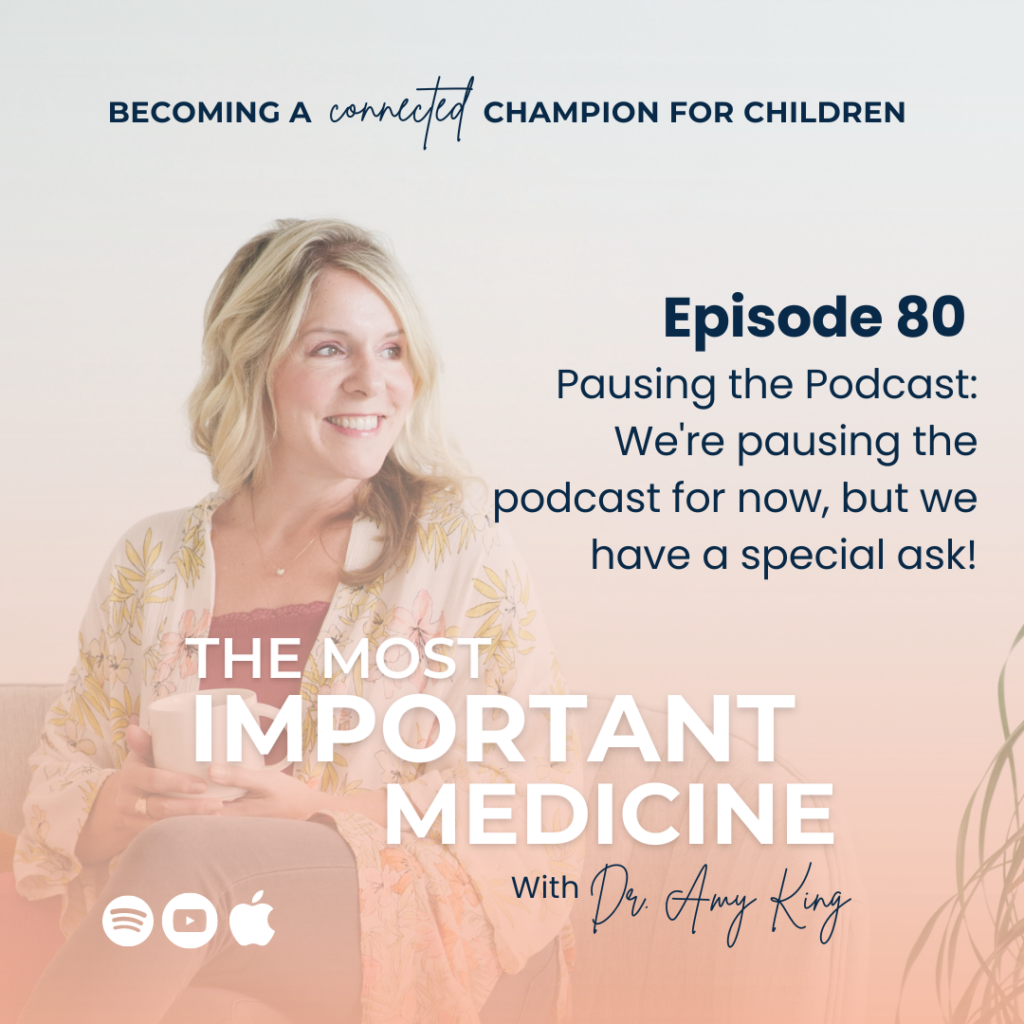
Friends, we’re pausing the podcast for now, but we have a special ask!

  1. Tell us which episodes were your favorite so we can create a Top 5!
  2. Join us in a ConnectEd Collab
  3. Invite Dr. Amy to be on YOUR podcast or recommend her to your favorite podcast.

Dr. Amy’s New Book!

On Amazon here

From the American Academy of Pediatrics

RESOURCES

Dr. Amy’s Newsletter

Learning Collaborative – The ConnectED Collab Invitation

Dr. Amy Youtube

FREE DOWNLOADS

Top 10 Guiding Principles When Working with Children & Families

Start Creating Boundaries Handout & Script

Finding Calm to Prevent Overwhelm

Don’t Forget! Follow Dr. Amy on LinkedIn, Facebook, and Instagram

For more information visit www.doctoramyllc.com 

Blog

Pausing the Podcast

February 27, 2024

Friends, 

My podcast has made its way to 80 episodes! I’m so happy with the stories that are out in the world because of this brave endeavor. Stories of hope, healing, and connection wrapped up in trauma-responsive love – I’m proud of this work that my team and I have created. 

But for now, I’m making a decision to pause the podcast. There are many incredible adventures happening in my business right now and I’m finding ways to integrate calm into both my business and for my team. That means, as we release a book, build incredible curriculum for resilience and connection, and grow our ConnectEd Collabs, we need some breathing space. I hope, in this pause, you witness what I would like for any of us: to reflect on what our bandwidths are and to protect ourselves and our teams. While Dr. Amy King, PHD, LLC is mighty, we are a small team. So, we need to be intentional with our time and energy. 

Here’s what we’d like to do moving forward and we could use YOUR help!

  1. Tell us your favorite episode so far – a story that touched you or that you related to. We’re going to create a TOP 5 guide for others to get inspired and connected too!
  2. Let us know other ways you’d like to connect. We have a strong commitment to continue to offer FREE, VALUABLE information into the world – just with a bit less production! So, tell us, would a monthly zoom call be helpful? A Youtube Live? A Facebook group or live chat?
  3. What do you want to hear or know more about? Give us some specific topics, ideas, or themes that you’re struggling with as a professional or parent. 

Finally, take a leap and join us, for free, inside on of our monthly learning collaboratives. We have incredible spaces for early educators, educators, healthcare professionals and mental health professionals. We know support is needed now more than ever. These groups are part content, part community. And they are thriving! 

And one last ask – if YOU have a favorite podcast that you listen to, or you host your own podcast, let me know! I’d love to be a guest and talk about the incredible work of responding to trauma and creating resilience for children and families. It’s my passion, it’s my wheelhouse, and it’s my deep desire to create a world where children and families feel seen, heard, and connected. 

Want more? Subscribe for weekly insights from Dr. Amy here!

Join Dr. Amy & Dr. Sheilagh as we discuss skincare, teen confidence, and how we can relate and bond with our teens about this important topic!

We chat about why this topic is so important, for teen girls AND teen boys. And she provides her top tips on managing teen skin care. Hint, it’s super straightforward!

Dr. Sheilagh Maguiness is a double board-certified Dermatologist and Pediatric Dermatologist with a busy practice in Minneapolis, Minnesota. She currently serves as the President of the Society for Pediatric Dermatology.

She is mom to two tween boys and co-founder of Stryke Club, a personal care brand made just for boys.

Dr. Sheilagh is passionate about education and prioritizes teaching with every patient encounter. She strives to educate the next generation of dermatologists and pediatricians in her practice, and teaches families and caregivers through content created for national pediatric and dermatological societies and her social media presence (@dr.sheilagh.m on Instagram and @drsheilagh on TikTok).

Dr. Amy’s New Book!

On Amazon here

From the American Academy of Pediatrics

RESOURCES

Dr. Amy’s Newsletter

Learning Collaborative – The ConnectED Collab Invitation

Dr. Amy Youtube

FREE DOWNLOADS

Top 10 Guiding Principles When Working with Children & Families

Start Creating Boundaries Handout & Script

Finding Calm to Prevent Overwhelm

Don’t Forget! Follow Dr. Amy on LinkedIn, Facebook, and Instagram

For more information visit www.doctoramyllc.com 

Blog

Touchpoints

February 20, 2024

Friends, 

You may not realize it, but I see and respond to EVERY email from my inbox, personally. And this is why: being seen and heard is important. You’re taking time to read my words, feel inspired, and, perhaps, take small actions. So, it means a great deal to me when you reach out, email, ask questions, and share part of your lives with me. I don’t take you for granted, ever. 

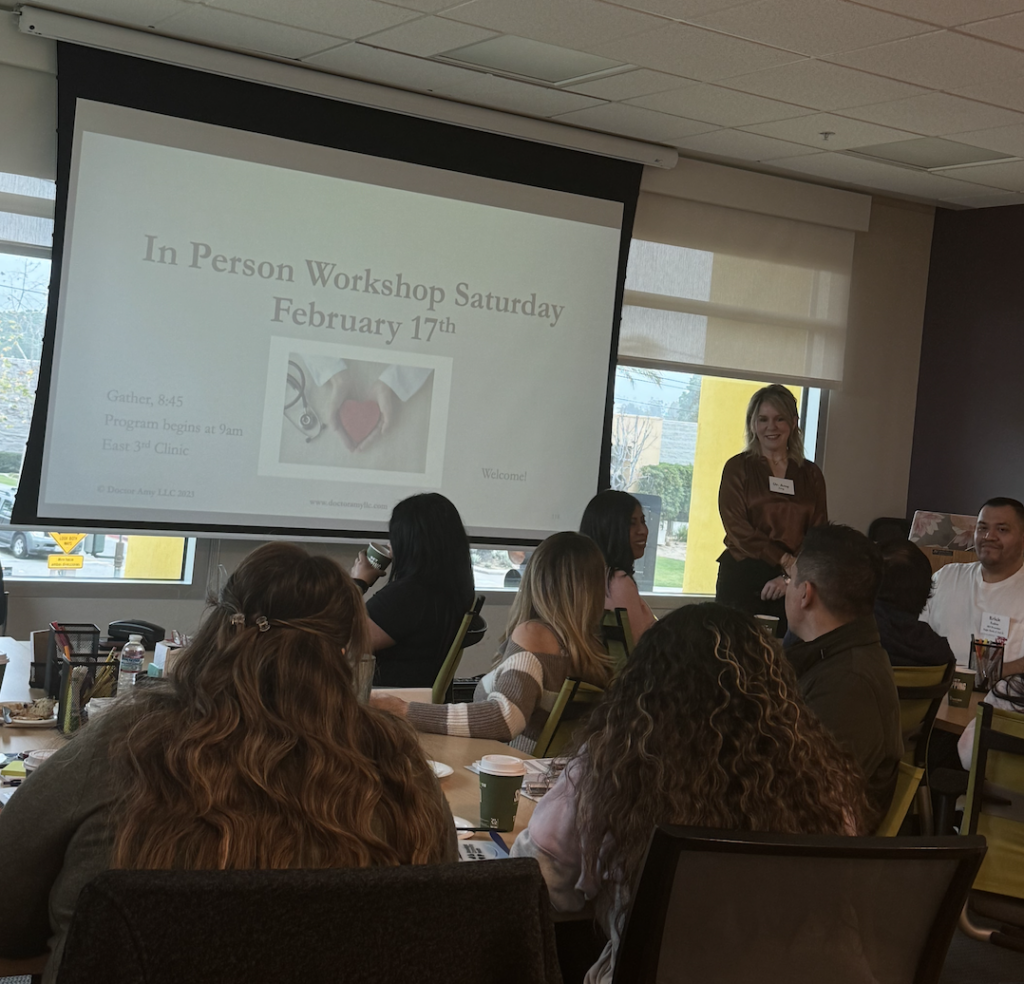
Today, I’m sitting at an airport in Los Angeles, after spending a day with amazing humans I was training as they learned about trauma informed care. You know what they’re realizing? Trauma is everywhere. It lives in us. And it lives in the people we work with and in people we love. And we hold hope that we can address the manifestation of trauma by creating connection and being in community. I feel honored to do this work. Again, there were so many stories that were shared today. 

Speaking of sharing, a recent newsletter reader shared this poem with me after I wrote about the house where I grew up. I wanted to share it with all of you, because it brought me to tears. 

The small plot of ground
on which your were born
cannot be expected to stay 
forever the same.

Earth changes,
And home becomes
different places.

You took flesh from clay,
but the clay did not
come from just one place.

To feel alive, important and safe
know your own hills and waters
but know more.

You have stars in your bones
and oceans in your blood.
You have opposing terrain
in each eye.

You belong to the land and sky
of your first cry
You belong to infinity.

Alla Renee Bosarth

Please continue sharing with me and with others. And if you know of a friend or colleague who should be reading this newsletter, please send them here.

Want more? Subscribe for weekly insights from Dr. Amy here!

Let’s dive into three ways to create mentorship, success, and unlock potential in teenagers with Dr. Amy & Will Elliott. Will Elliott is one of the world’s top life coaches for teens and is dedicated to helping the next generation live confident, bold, and purpose-driven lives. We discussed why teenagers feel misunderstood and what the TRULY need from adults.

You can find Will @coachingwithwill on Instagram!

Dr. Amy’s New Book!

On Amazon here

From the American Academy of Pediatrics

RESOURCES

Dr. Amy’s Newsletter

Learning Collaborative – The ConnectED Collab Invitation

Dr. Amy Youtube

FREE DOWNLOADS

Top 10 Guiding Principles When Working with Children & Families

Start Creating Boundaries Handout & Script

Finding Calm to Prevent Overwhelm

Don’t Forget! Follow Dr. Amy on LinkedIn, Facebook, and Instagram

For more information visit www.doctoramyllc.com 

Hey Friends, 

Happy Valentine’s Week – even if you think it’s full of mush and obligatory sweetheart gifting – I LOVE, love, so I support the expression of it in any form. And speaking of expressions of love, can we talk about this photo?

This is my brother, Tyler. He’s 35 and has developmental delays. He’s perfection in all-things being human. And this past weekend, he was celebrated at Night to Shine in Des Moines, Iowa. Night to Shine is a non-profit funded by Tim Tebow to provide a prom experience for teens and young adults with disabilities. 

Tyler was born in 1991, just as I was turning 16. Tyler was a surprise for my single mom, me, and my sister, but we welcomed him into the world with joy and anticipation. He had a shock of red hair and the sweetest, round face. At two months old, the doctor discovered he need heart surgery and he spent his first Christmas in the hospital. By his toddler years, it was clear that he had global developmental delays, both cognitively and physically. At 35, he lives full-time with my mom. 

When I say Tyler is perfection in all-things being human, it’s not hyperbole. He emulates kindness and love. He’s curious, kind-hearted, easily moved by emotions, and unconditional in his love for others. He is rarely angry and never holds onto grudges. He forgives easily, cuddles fiercely, and has a great sense of humor. He loves his cat, his family, police officers and paramedics, and a good queso dip. And, his life is limited. Tyler will never drive a car, never live independently, and will never have a family of his own. So, to see him celebrated, cherished, and experiencing a ritual so many of us take for granted brought me to tears. 

Having a family member with a disability brings with it waves of grief and loss. So many people tell family members what their loved one will never do. But look at this – he was king for a night, proudly donning a suit and tie. He was surrounded by princesses, fellow friends with disabilities, and a host of loving adults.  

Thank you to everyone who made this moment happen for him. Thank you, caregivers, who do the care-taking. Thank you to every person who truly sees people with disabilities as human and loves their humanity. Thank you to every soul who celebrates my brother for who he is, not who he is not. I would be proud if I could be half the compassionate human he is every day. 

Want more? Subscribe for weekly insights from Dr. Amy here!

Want More Resources?

Check out my free resource page

yes, please!

Secret Link