Featuring Articles for HEALTH CARE PROVIDERS, EDUCATORS, AND PARENTS 

Welcome to the Blog

Have a topic idea? Reach out to me at info@doctoramyllc.com with your ideas! 

SUBSCRIBE TO THE NEWSLETTER

Picture a teacher on the Tuesday before Thanksgiving break. Half the class is absent before the holiday. The kids who stayed are bouncing off the walls. She’s counting down to Wednesday, and if she pauses long enough, she’s counting something else too: the little girl who finally made eye contact this fall, the dad who started saying good morning, the colleague who covered recess when she needed five minutes.

That second list is easy to miss at the end of a long year.

This year, so many of you did that work. Together we shared countless workshops and keynotes, presented at national conferences, and welcomed hundreds of new Champions into this community. Every time I saw a sea of hopeful faces, I knew it was full of people who already care deeply and came looking to feel more equipped and supported.

I’m grateful for you. Our whole team is grateful for you. And I know gratitude can be hard to feel when you’re exhausted. This work is heavy, the year was long, and some of you are limping into this holiday. Both things can be true.

So, whether you celebrate Thanksgiving or not, here’s my one ask for your week: rest and restore. Not in a half-a$# way, but in a way that actually fills you up.

Pick one thing that refuels you. A walk, a nap, a long phone call, the book you’ve been ignoring since August. Put it on your calendar like an appointment.

Say no to two things. The inbox. A chore? They will be there on Monday, I promise.

Notice your own list. Who showed up for you this year? Tell someone.

Let someone care for you. You spend all year being the safe, steady adult. Can someone else hold you?

The adults who care for kids need care too. That’s why this community exists, and it’s why we want to reach even more people in 2027.

If you know an organization that could use this kind of inspiration and support next year, we’d love a warm handoff. Reply to this email with an introduction, and our team will take it from there.

Thank you for being the adult who keeps showing up. Now go rest.

P.S. And if you’re hosting this year, may your turkey thaw on time.

Picture a five-year-old walking into school on a Tuesday. The morning at home was rough, and nobody said goodbye. Then the bus driver says, “Saved you the front seat.” The woman in the front office knows his name. His teacher looks up and says, “There you are, I was waiting for you.”

None of those adults thinks they did anything big. But that little boy just collected three small pieces of proof that he matters.

That’s relational health.

Relational health is the quality of the interactions that build meaningful relationships. From birth to five, we call it early relational health (ERH), but it’s happening our whole lives. It’s how we grow empathy and social skills, form secure, lasting attachments, and come to know we have meaning to someone.

It also shapes every relationship that comes after. A child with safe, stable, nurturing relationships learns, “I have worth, and the people who care for me will meet my needs with sensitivity.” A child whose relationships are chaotic, unpredictable, or inconsistent learns something else: people can’t be relied on, they won’t be there when I need them, and maybe I’m not worth showing up for. Those lessons become the habits we carry for life.

Now for the great news. Any adult in a child’s life can strengthen that child’s relational health, even when other relationships, including at home, aren’t safe or steady. Teacher, doctor, nurse, home visitor, coach, mentor, pastor, volunteer, your kid’s friend’s parent. That includes you.

It looks like this:

Show up. Consistency is the message. Be there on Tuesday, and be there on Thursday too.

Say their name with warmth. Kids can hear the difference between being counted and being welcomed.

Get curious. Ask about the drawing, the sneakers, the video game you’ll never understand. Curiosity says, “You’re interesting to me.”

Tell them. “I’m glad you’re here.” “You matter to me.” “You’re lovable, just as you are.” Kids don’t always assume we think so.

Relational health costs us nothing to give and everything to withhold. When we look at young people facing serious mental health struggles, substance use, or suicidal behavior, what we know from the research is that the difference is often one adult, and if they’re lucky more than one, who is safe, stable, and nurturing, and who keeps showing up to tell them they’re unconditionally loved.

So, this isn’t another tool or one more thing to check off your list. It’s a movement. We all have a role in building safe schools and communities where children have positive mental health and belong. Period.

Forward this to five people who need to hear it: your colleagues, friends, and neighbors who aren’t sure they make a difference in a child’s life, or aren’t sure how.

You’re already that adult for more kids than you know.

P.S. If someone forwarded this to you, welcome. You were on their list because kids matter to you.

We wrapped up our fall conference this past week. Woohoo!

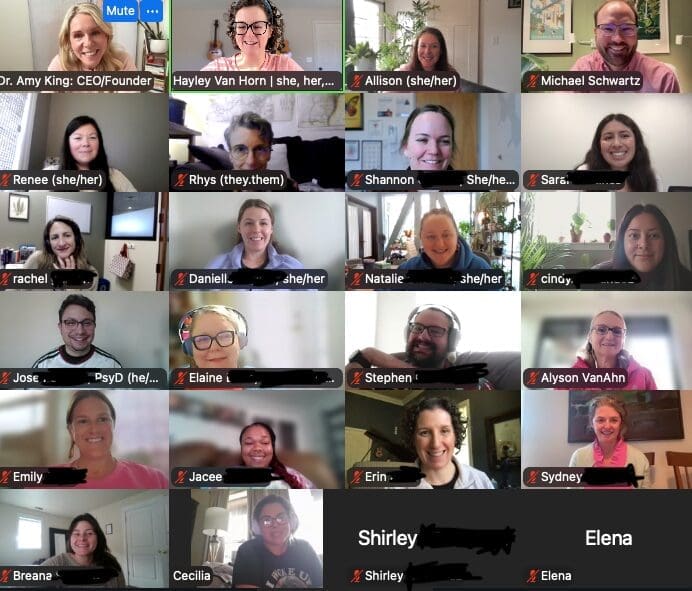
We’re welcoming more than two dozen new Champions into our ecosystem of incredible adults who are crazy about kids. I’m continuing to feel humbled and honored by the work that we do and the connections that we make in the world.

Here’s what we’re clear about: when adults learn what creates resilience for children and families through relational health, we get better outcomes for staff:

  • Less burnout and overwhelm.
  • More confidence and competence, so they can make a meaningful difference in the lives of children and families.
  • Ways to bridge the gap, so adults can offer brief interventions that strengthen mental health for children and families.

This means better outcomes for children too:

  • More children who are regulated in relationships.
  • More children who are seen, heard, and cared for.
  • More children who experience the power of connected relationships.

That’s the movement we’re building over here: creating Champions in the lives of children and families.

And we want you in! Dozens of people have already signed up for our free workshop next week, Ruptures Happen, Repairs Matter, and we’d love for you to join us too.

Monday, November 16, at 9am PT / 12pm ET. Save your spot here!

Let’s keep building together.

Blog

I see you.

November 3, 2026

I’m writing this with a full heart and tired feet. I have a story to share, a raffle winner to announce, and a free workshop for all of you.


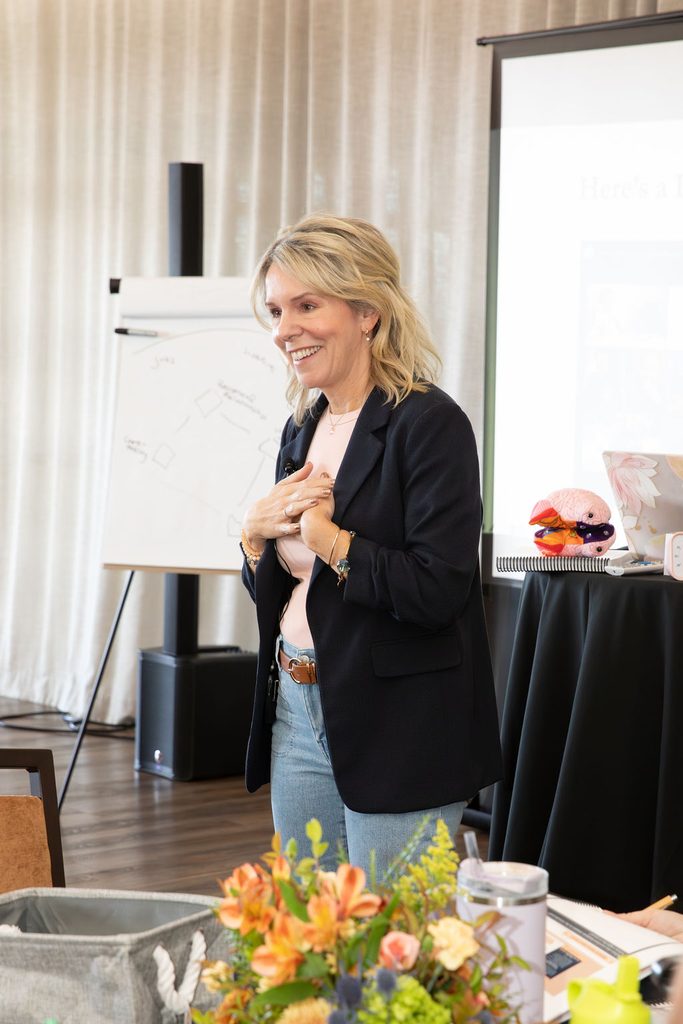
This past week, I got to show up twice as a presenter and a sponsor: in person at the Zero to Three National Conference, and virtually at the Healthy Families America Conference.

At Zero to Three, I met hundreds of new friends from across the United States and Canada. We talked about how to equip professionals, reduce overwhelm, and build confidence with actionable tools they can use at their sites.

At Healthy Families America, 300 people joined my session on ruptures and repairs in early relational health. Three hundred people choosing to spend the end of a conference day with me truly filled up my heart.

But there’s one moment I keep going back to.

At the end of my talk at Zero to Three, a woman came up to me with her eyes full of tears. She told me she reads our newsletter and listens to me speak every chance she gets. “This work is really hard,” she said. She shared that when she hears me talk, she’s filled up with hope, and she feels seen and appreciated. She thanked me for helping professionals feel like their work is valuable.

My eyes filled with tears too, because that is exactly why I do this work.

So, here’s what I want you to hear: there will be hard days, and they don’t mean you’re doing anything wrong. Working inside systems that don’t always say thank you is heavy. The work you do matters, and being with hundreds of you this past week reminded me how valuable and important it is.

On that note, here are two things to fill your cup:

We have a winner! At Zero to Three, we raffled off two comfort baskets and a lunch and learn for one organization. Congratulations to Brittany R. with Wellroot Family Services in Georgia, who won the lunch and learn for her team!

A free workshop for you. We’re committed to helping the helpers, so we’re opening the door with a free workshop, Ruptures Happen, Repairs Matter, on Monday, November 16, at 9am PT / 12pm ET. It’s a chance to meet our community and get a feel for what we do. Save your spot here.

And to our new friends from this week: we’re filling our 2027 training schedule now, and we’d love to see your organization on the calendar. Join us at the workshop, or simply reply to this email.

P.S. We’re hosting our own fall conference this week, so we may be in and out of the office while we welcome a brand-new group of Champions. We’ll look forward to hearing from you when we’re back.

Our newsletter today is a little shorter, with a brief message on how to help my community.


On October 15, our Central Oregon community was shaken by the shooting at Silver Rail Elementary in Bend. Three children and a teacher lost their lives, and others were hurt. So many of you have reached out asking how to help. Here is how you can help the students and teachers at Silver Rail.


How to help Silver Rail

  • Give directly to the Silver Rail Elementary PTO: silverrailpto.org/donate. The PTO is run by Silver Rail parents who are grieving alongside their own kids, and they’ve committed to deciding with families how every dollar is used.
  • Send a card, letter, or a child’s drawing: Silver Rail Elementary PTO, 61141 S. Hwy 97, Box #433, Bend, OR 97702.

A small practice for this week


Kids notice when the adults around them are rattled. You don’t need perfect words. You just need to be a steady adult.

  1. Regulate first. Take one slow breath before you answer. Your calm is the first thing a child reads.
  2. Ask, then follow. “What have you heard?” lets you gently correct scary rumors without adding new ones.
  3. Keep it short and developmentally appropriate. For younger children, you can say something like, “Something very sad happened at a school. Lots of grown-ups are working hard to keep kids safe.” For older kids, it’s important to ask them what they’ve heard and what questions they have, and then respond with factual information.
  4. Lean on routine. A predictable day is a quiet message of safety.

And helpers, who is checking on you? Co-regulation runs in both directions. Let someone hold you up this week too.


Three conferences, two weeks


Our team is on the road (and on the screen) a lot this fall, and I’d love to see your faces.

  • This week: ZERO TO THREE LEARN Conference, October 27-29, Oregon Convention Center, Portland. Come find us at Booth 510! Stop by, say hi, and tell us what’s been carrying you lately. zerotothree.org/conference
  • This week: HFA LIVE 2026: Weaving Our Stories (Healthy Families America, virtual), October 27-29. Pop into the virtual exhibitor lounge and you’ll find our booth there. Come say hello! healthyfamiliesamerica.org/current-affiliates/hfa-live-2026
  • Next week: Becoming a Connected Champion Fall Virtual Conference, November 4-6. Registration is now closed, and my heart is so full. We’re welcoming frontline professionals from all over the country for three days of learning about relational health: home visitors, educators, Head Start teams, pediatric and behavioral health staff. These are the people who show up for children and families every single day, and they deserve to feel equipped and supported. To all of you joining us: we can’t wait. To everyone else, stay tuned for what’s next at becomingaconnectedchampion.com.

 
Weeks like this remind me why we do this work. Relationships are the intervention.

A director asked me a question recently that I plan to answer on Thursday.

“How do we keep our staff when we can’t give them a raise?”

She was asking because she’s watching good people walk out the door, folks committed to children and families. You know the ones. The teacher who could calm any toddler. The home visitor families asked for by name. The person who held the whole team together on the hardest days.

Maybe you’re watching it happen too.

Here’s what I know after more than 25 years with the adults who care for children: they’re not leaving because they stopped caring. They’re leaving because they care so much, and they’ve been handed moments nobody prepared them for.

The child who throws a chair. The parent yelling at them. The preschooler who bites, kicks, and then crumples into sobs. Big feelings and complex behaviors, every single day, with no real tools to meet them. That’s what burnout looks like in our field. And the data backs it up: burnout and job stress outrank pay as a top reason frontline staff leave.

And friends, that’s actually hopeful news. Pay and caseload may be out of your hands. The tools gap is not. That’s a variable you can move.

So I’m hosting a free briefing, just for leaders.

You Can’t Pay Them More. You Can Still Keep Them.
A free 40-minute briefing for executive directors, managers, and decision makers
Thursday, October 15 | 12:00 pm Pacific / 3:00 pm Eastern | Live on Zoom

In 40 minutes (I respect your calendar, I promise), you’ll:

  • See what one departure is really costing you, with the replacement math done live using your sector’s numbers
  • Understand why your staff are burning out, and the specific, fixable driver underneath it
  • Walk away with the Frontline Retention Audit, a free 3-minute self-assessment you can run that same afternoon
  • Get your hardest questions answered, live

I hope in our 40 minutes together, you feel supported. Leading right now is lonely. You’re holding your staff’s exhaustion, board’s expectations, and the families who depend on all of you. You deserve space to say, “Of course this is hard. Let’s figure out what’s going on.”

It’s okay to not be okay. 

Who should be there?

If you make decisions about training, budget, or staff retention in early learning, home visiting, child welfare, pediatric clinics, or behavioral health, this hour is for you.

If you’re on the front lines and reading this thinking, “My director needs to hear this,” forward this email. Sometimes the bravest thing we can do for our team is say, “I think we need support.”

Can’t make it live? Register anyway. Everyone who signs up gets the replay within 24 hours.  

➤ Reserve Your Seat

Your mission: come, and let yourself be supported.

Your homework: bring a fellow leader who needs this too.

Because when we keep the adults, children keep the people they trust. Staff outcomes are child outcomes. Every time.

P.S. Frontline friend, if your team is stretched thin and you don’t have a seat at the decision table, this is your seat. Forward this to your director with one line: “Can we go to this together?”

Over 100 of You Showed Up…

I have been trying to find a word for what I am feeling, and I am not sure one exists. I’m tearful even as I write this.

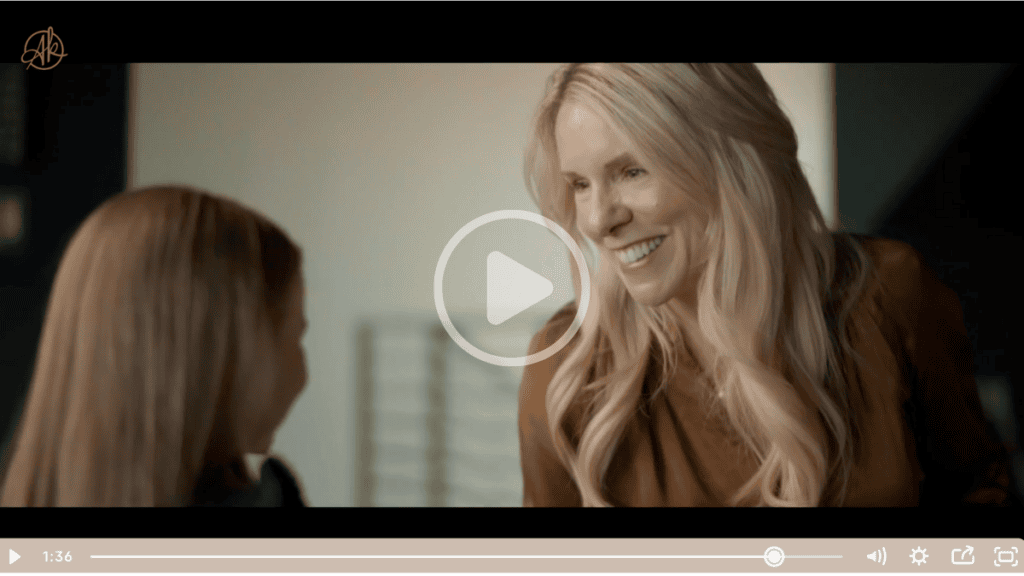
Today we premiered the film about Becoming a Connected Champion. Over 100 people came. Some of you I have known for years, my family, people from trainings, clinics and conference rooms across the country. Some of you I had never met and had never heard of me until someone forwarded you a link. Thank you for showing up for children today, with curiosity.

I keep reaching for a word that means both honored and responsible at the same time. The closest I can find is entrusted. This work feels as if something was handed to me, and I am not allowed to be careless with it. That is exactly how today felt.

Seven minutes. That is all the film takes. In seven minutes, it captured something I have spent 25 years trying to explain at podiums and in rooms with all of you. I watched the film with all of you and found myself tearful, which is a strange thing to say about your own work. But it is not really my work. It is the work of every person who has sat in one of these rooms and decided to try something different with a child the next morning.

I’m so humbled to share this work with all of you.

What we shared

The numbers we put on the screen are not marketing. They come from the people who have been through this training.

  • More than 1,000 professionals trained
  • 82% feel less burned out
  • 99% leave with more hope
  • Over 90% of Champions feel more equipped to use interventions that strengthen relational health for children and families

The people who work with and parent the most vulnerable children are the close to quitting because no one is equipping them. A child or family waits roughly six months for mental health services; but they see YOU tomorrow morning. This is where my work lives. You need tools that fit in the five-minute windows you actually have, and you need people around you who understand.

Watch the film

If you missed the premiere, the film is waiting for you. Seven minutes, and you can watch it over your own lunch.

Watch the film and see what we do

Come be a Connected Champion

The Becoming a Connected Champion Fall Virtual Conference is November 4 through 6. Three days, live and virtual.

You walk in overwhelmed by big feelings and complex behavior. You walk out certified, with practical tools in your hands, a shared language for your whole team, and a community that has your back for two years.

  • Your Cards for Connection toolkit, shipped to your door before we begin with lots of fun extras
  • Up to 14 hours of CME/CE
  • A sponsored meal
  • Two years in the Champions Collaborative – 24 more hours of relational health support

And, the first 50 registrants get 90 days of our new app before anyone else in the world has it.

Reserve your seat

To everyone who came today, to everyone who forwarded the link, and to everyone who sat with us: Thank you. I am still a little overwhelmed.

See you in November.

— Doctor Amy

P.S. What word would you use that conveys both honored and responsible to share important work? Let me know.

EEEK! Our film is done, and at minute 6 you’ll see why I burst into tears. It’s a little surreal to see my life’s work come to fruition in a short film. But you get to see it first because whether you’re a parent or a professional – you’re the ones out there every single day on the front lines, holding up the sky. My life’s work has always been about supporting you so that we can support more kids.

Join me for the premiere on Thursday, October 1, at noon Pacific. Twenty minutes over lunch. No cost, no pressure. Just me, a few hundred of my closest friends, and a whole lot of excitement.

I honestly doubted anyone could capture what we do in just a few minutes. We did it in seven.

A few, fun details:

  • Something most of you don’t know about me
  • Minute SIX! The moment I burst into tears over what this work is doing
  • Why this matters if you’re a parent
  • What you’ll never un-know

This film is also your first look at what it will feel like to be with us at our fall Virtual Conference, November 4 to 6. On Thursday, I’ll share how to join us.

Bring a friend. And a tissue. You’ll need it.

With compassion for all you do,

I know your inbox has been getting a lot of love from us lately (fall launch season will do that), so this one’s short and sweet. Just an update on what’s been happening behind the scenes, a couple of fun teasers, and an answer to a question I keep getting asked.

What we’ve been up to

Behind the curtain, our team has been deep in training and rebranding mode, getting our signature offer ready for its next chapter: Becoming a Connected Champion, powered by Cards for Connection™. We’ve also been working closely with our marketing team on our fall launch, and there’s a lot coming your way that we’re genuinely excited about.

I’ve been on the road too. This month took me to the Early Intervention and Prevention conference in Illinois and up to the Hope and Culture Summit in Washington. This week I’m spending time with two incredible groups, the Confederated Tribes of Grand Ronde and UKANDU. Every one of these rooms reminds me why we do this work.

And because we can never resist a little fun, our friends at Muse Storytelling put together a teaser video for us. Keep an eye out for it. It might make you laugh, it might make you tear up, it will definitely make you want to come play with us this fall.

“Can parents take this training?”

This question has come up a lot lately while we’ve been promoting our fall conference, so let’s settle it right here: absolutely yes.

Parents are not just welcome, they’re wanted. So many of the professionals who train with us are parents too, I can’t think of a group who would benefit more. This conference covers how to respond to behaviors and big feelings in children of all ages, and it also gets into the barriers we carry from our own upbringing that shape how we show up as caregivers. Every single person who leaves this conference, parent or professional, leaves changed. There is real hope and real joy in learning a new way forward.

It’s virtual, so if you’ve been on the fence, here’s an idea: 

Grab two friends and turn it into a watch party. We’re offering a discounted rate for groups of three, which makes it easier (and more fun) to do this together.

The first 50 people to join also get access to the Dr. Amy app, a tool I truly believe will become priceless for caregivers.

I know it’s an investment up front, and payment plans are available if that helps.

Here’s a way to look at it: if you pair the conference with two years in our community of practice, it breaks down to about $23 a month. That’s a pretty small ask for a lot of long-term change for your family.

If you’ve been looking for something transformational this fall, whether for yourself, with a colleague, or with a couple of friends, this is your sign. Learn more & join us here!

In one of our recent Champions Collaborative meetings, the community of practice open to everyone certified in Cards for Connection for two years following their certification, we had the privilege of meeting a young man named Sam. Sam is the CEO of Autism Rocks and Rolls, and he came to us with a lived experience worth slowing down for. 

A few things from his story have stayed with me.

First, Sam talked about accommodations. In his words, accommodations allow people to show what they’re capable of. He pointed out that, in some form, everybody needs accommodations. For people with autism, the right accommodations aren’t extra, they’re what allows them to shine.

He also gave professionals and parents permission to learn as they go, to adjust their approach over time rather than getting it perfect from the start. His hope is that everyone working with someone with autism becomes a detective about their behavior, curious about the message underneath it rather than the behavior itself. Behavior is communication. That’s the heart of it.

This idea sits at the center of our certification program. One of our cards, “What’s Behind the Behavior?”, names the intervention we teach, and it is built entirely around that question. From there, we teach professionals to respond to what that behavior is communicating, whether it’s an unmet need, a missing skill, or a feeling underneath the surface.

In Sam’s mind, accommodation should be universal, offered to everyone rather than reserved for a few.

After talking with Sam and his mom, I had a reflection of my own. When we offer accommodations to people on the spectrum, we give them a path to regulation. Accommodation leads to regulation. And regulation is what allows the thinking brain to come online, what makes relationship and learning possible in the first place. Accommodation leads to regulation, and regulation leads to learning. That felt like a real aha moment for our group.

Finally, Sam talked about explaining “the why”. Too often, people with disabilities are forced into an intervention, a support, a specialist, or a therapist without ever understanding the reason behind it. When Sam was first told he needed speech therapy, he pushed back. In his mind, he already knew how to talk. It wasn’t until someone explained that speech therapy was also about the nuances of communication, about relating to others in social spaces, that it started to make sense to him. People with disabilities deserve to understand the how and why behind an intervention, not just be subjected to it in the name of fitting a mold of what we consider socially appropriate.

Our Champions left that meeting moved by Sam’s honesty and openness, by how funny and warm he is, and by how much knowledge and success he carries. The biggest takeaway for all of us: when we lean into someone’s lived experience and truly listen to their story, we learn more than any book or class could ever teach us.

If these tools are something that would make your work more meaningful, we hope you join us for our fall conference, November 4-6.

Want More Resources?

Check out my free resource page

yes, please!

Secret Link